


This week’s power rankings include a major update of the methodology, and you’ll see that many of the visuals have changed. I’m also going to be directly comparing the implied Week 6 win probabilities and point spreads from my power rankings to what the market is saying on prediction markets and sportsbooks.
The major additions to the methodology are as follows:
Better adjustments for non-quarterback injury clusters
Better decay weighting on older results to improve predictive power
Adjusting dropback efficiencies for PFF grading inconsistencies
Daily updating of the paid subscriber Google sheet for injuries and other relevant news items
For more info, you can find the archive of previous Power Rankings posts here, which detail the previous methodology.
TEAM OFFENSIVE AND DEFENSIVE STRENGTH
This plot shows the SOS-adjusted performance for every team in their 2026 games. At the risk of confusing things further, I added arrows next to the team logos to show how they have moved week-over-week. The diagonals represent a 55/45 mix for offense/defense strength, so teams along the same diagonal are roughly equal in total strength.
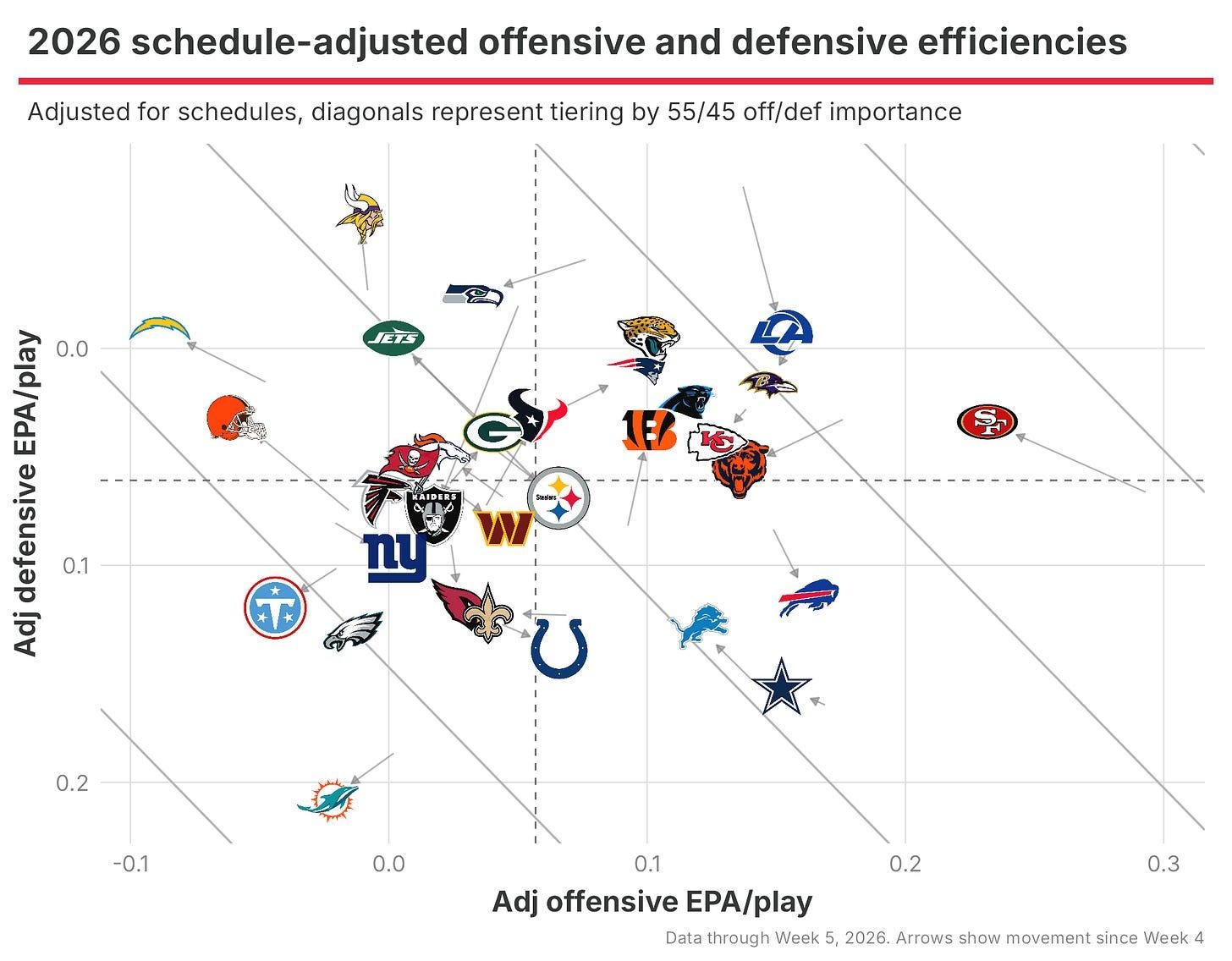
The San Francisco 49ers are still in their own tier for offensive performance in 2026, but they fell significantly, with a mistake-filled game against the Seattle Seahawks in Week 5, posting a modest 42% success rate and poor 20th percentile EPA efficiency (-0.16 per play). Yes, their defensive opponent was quite good, and they were on the road, but you had to expect some regression in just how incredibly good they had been through four weeks. At the same time that the 49ers’ offensive numbers fell, their defense got a bit better.
The reason the 49ers saw defensive improvement was an awful game from the Seahawks offense: 31% success rate and 3rd percentile EPA efficiency (-0.41 per play). Sam Darnold has struggled in his return, currently ranking 27th among 31 quarterbacks with at least 75 dropbacks this season, though his PFF offensive grade is more respectable, hovering in the low-70s. I expect Darnold to improve going forward, but it won’t help narratives on the streets of The Emerald City that Drew Lock played especially well in limited action.
The MNF shootout between the Los Angeles Rams and Buffalo Bills took a hammer to both teams’ defensive outlooks, though the Rams’ unit is still above average. Despite their 2-3 record, the Rams have performed like the second-best team in the NFL this season, and they came into the year as, by far, the No. 1 team in my power rankings. The peanut gallery on Twitter won’t like it, but the Rams are still very much an elite team.
Other notable movements have the Houston Texans and Cincinnati Bengals moving into the thick of a larger second tier of NFL teams. The 1-4 Texans have been much better than their record, but I’m not changing their fundamental outlook based on the addition of Marvin Harrison Jr., another example of a team stinking of desperation overpaying for talent in-season. The Bengals have been a solid team all season by the numbers, and their defense gets a bump for beating the hapless Miami Dolphins.
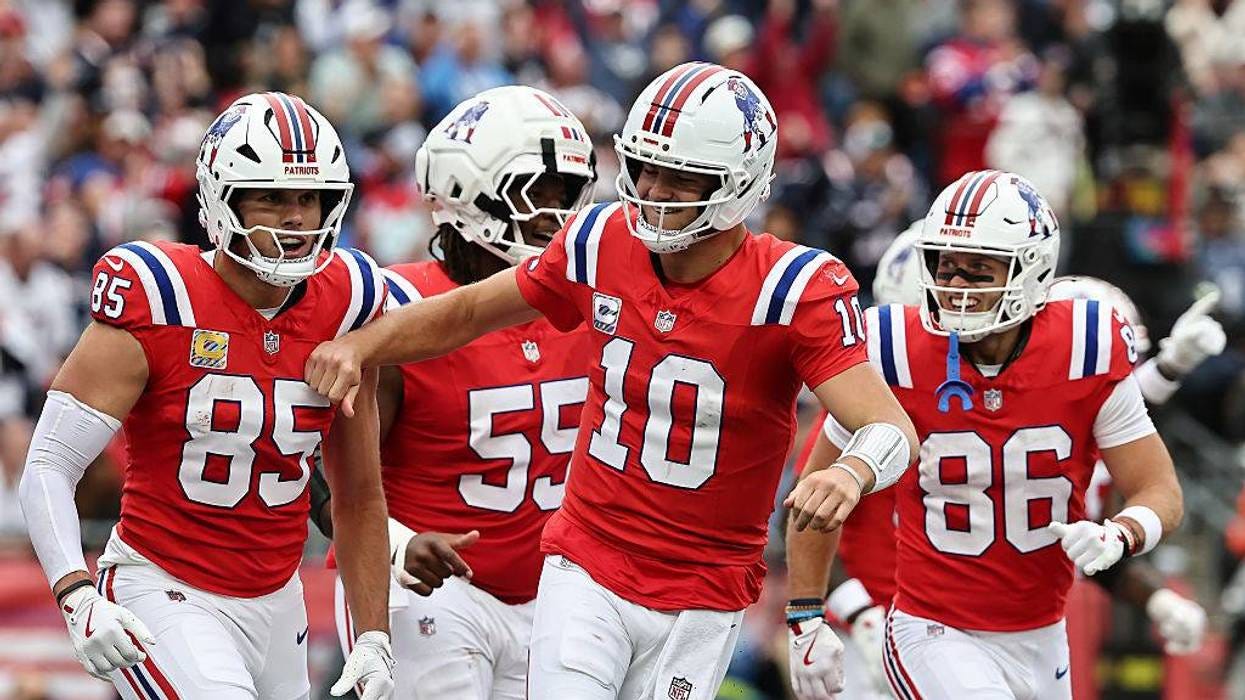
The Las Vegas Raiders took the biggest fall in 2026 performance from their curb-stomping at the hands of the New England Patriots. In the bottom half of NFL teams is where the Raiders belong, no matter how good their record looked after four weeks.
POWER RANKINGS VERSUS THE BETTING MARKETS
Let’s start with the power rankings (exact numbers updated daily for injury news on the subscriber Google sheet) before heading to the markets. Note that the ranking changes in the table below are not from my post last week, but from what they would have been under the new methodology through Week 4.
