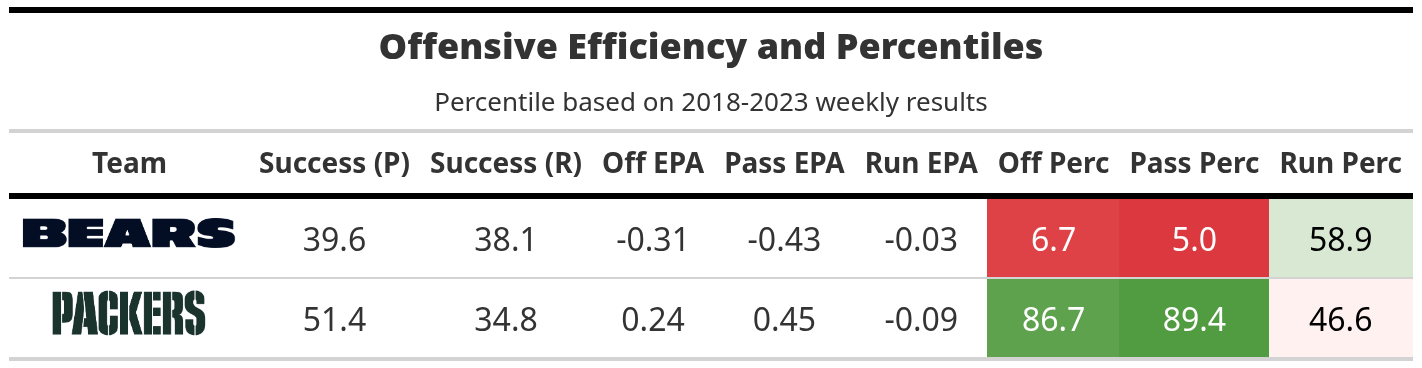
The adjusted scores quantify team play quality, with emphasis on stable metrics (success rate) and downplaying higher variance events (turnovers, special team, penalties, fumble luck, etc). Adjusted expected points added (EPA), in conjunction with opportunity-based metrics like total plays and drives, projects adjusted points. Adjusted scores have been tested against actual scores and offer slightly better predictive ability, though their primary benefit is explanatory.
All 2025-2022 and historical Adjusted Scores and other site metrics are available in a downloadable format to paid subscribers via Google Sheet.
Find previous advanced reviews here
** Adjusted Scores table:
“Pass” - Pass rate over expectation (based on context of each play and historical averages
“Success” - Success rate on offense, a key metric in adjusted score vs actual
“H & A” - Home or away team
Packers vs Bears (-1.5, 50%)

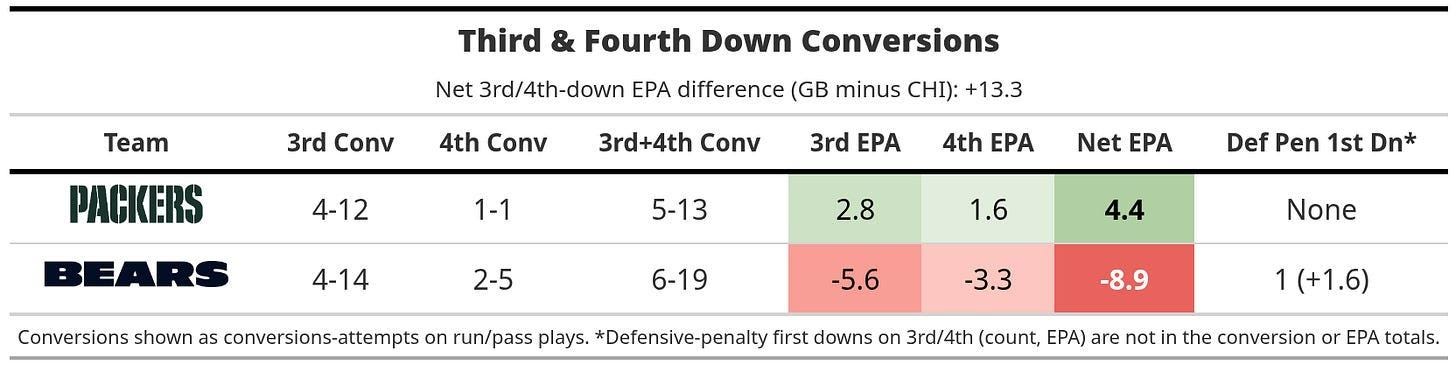
This beatdown by the Green Bay Packers wasn’t quite as big as the final score, with the Chicago Bears suffering unstable turnover and late-down disadvantages, and the Packers offense reliant on big plays. The Packers enjoyed a 5-0 turnover differential, netting +19.3 EPA in total. They also held the Bears offense to 4-of-14 on third downs, 2-of-5 on fourth downs, losing 8.9 expected points on late downs.
The rushing games were roughly equal in this game, but the Bears only called 20 designed runs while playing from behind, and their passing game was a mess. I have a feeling Caleb Williams’ injury recovery will magically shift into overdrive this week. The Packers outgained the Bears 7.3 yards-per-play to only 3.6, but ran nine fewer plays, with some shorter scoring drives.
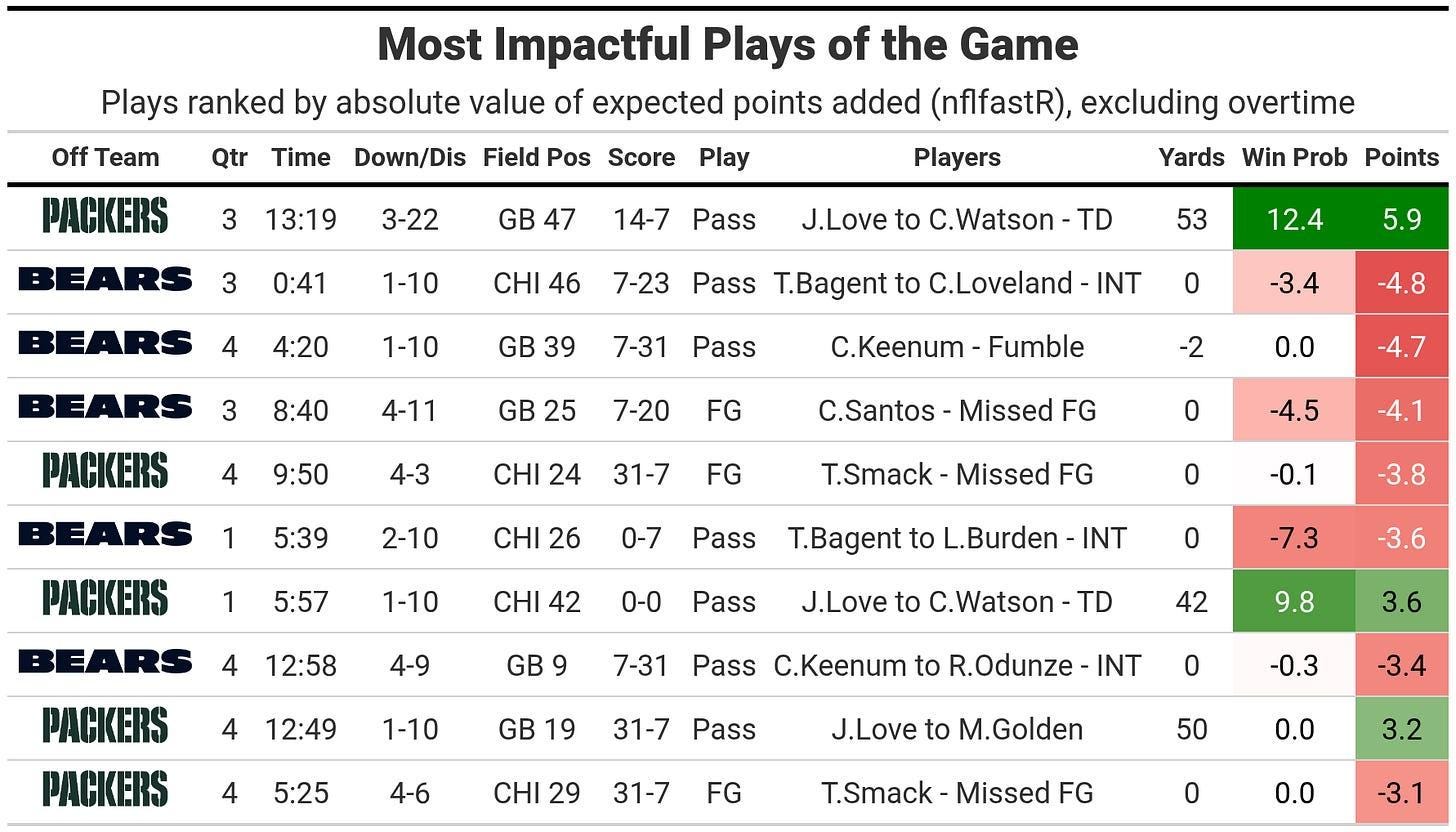
The top-two positive EPA plays in the game were Christian Watson touchdowns, both from 40-plus yards out. Jordan Love also found Matthew Golden for a 50-yard gain in the fourth quarter when the game was into garbage time.
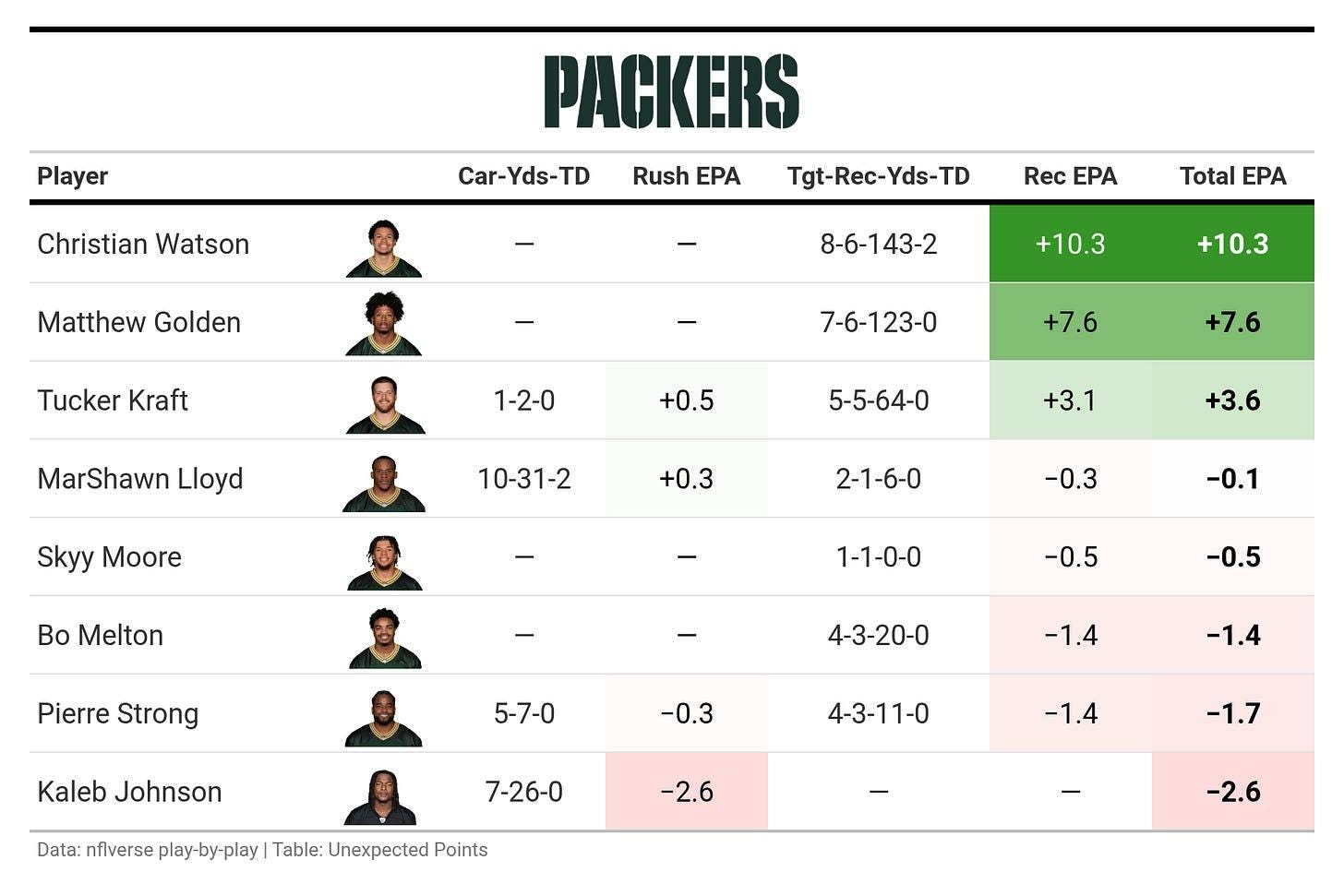
Watson’s +10.3 EPA when targeted led all Packers’ receivers, turning eight targets into 143 yards and two scores. Golden and Tucker Kraft were also productive, while the Packers rushing game was fairly average in value, offsetting poor yardage efficiency (2.9 YPC for running backs) with high-value short-yardage conversions.
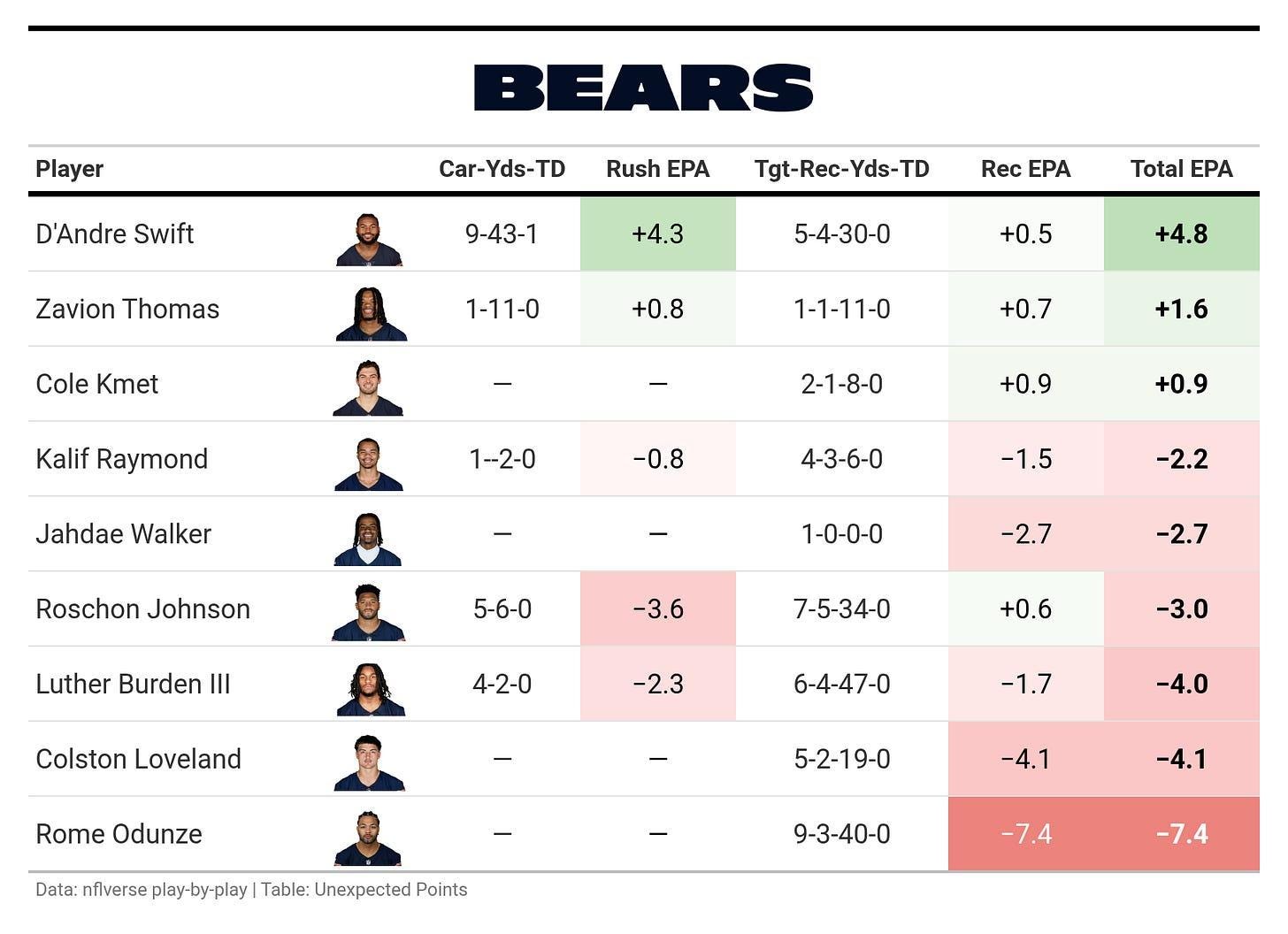
D’Andre Swift bounced back from his Week 4 benching to lead the Bears backfield with Kyle Monangai out, though 73 scrimmage yards doesn’t look superficially impressive. Rome Odunze led the Bears in targets, but the team was highly unproductive throwing him the ball, six of his nine targets falling incomplete, including an interception.
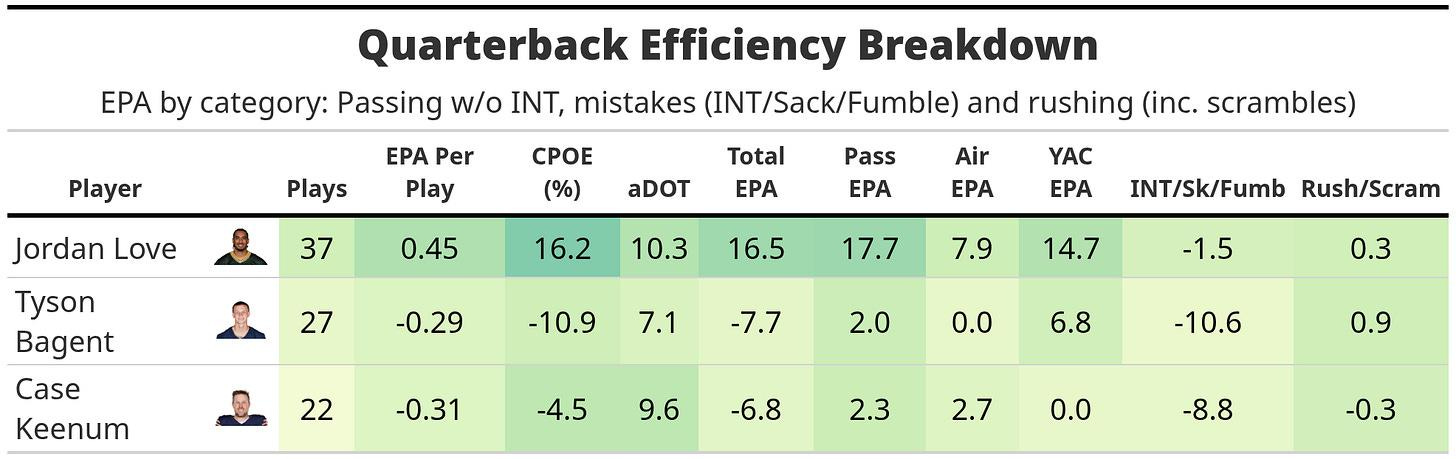
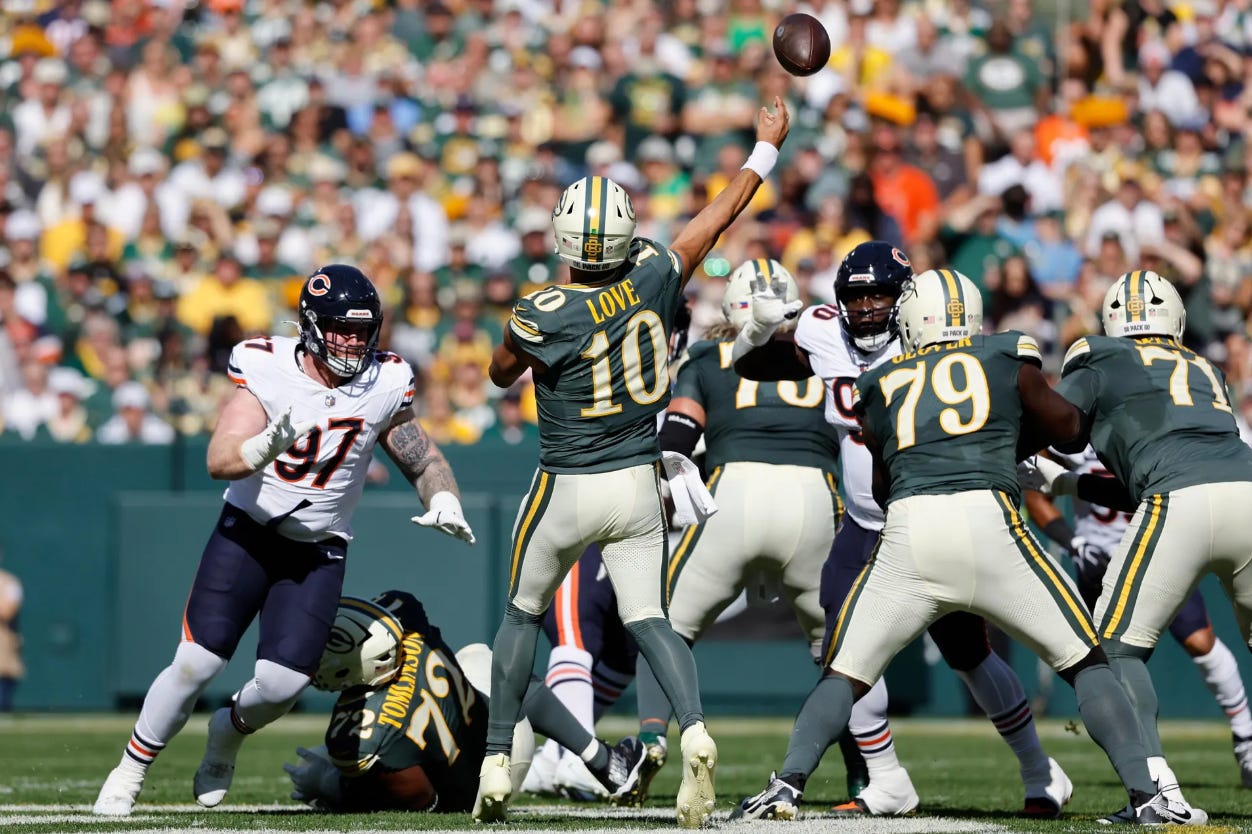
This was just the game Jordan Love needed, bringing back his deep-passing efficiency, while avoiding turnovers and taking just two sacks for nine yards lost. Love averaged 11.8 yards per attempt, and Love completed 80% of his passes (25/31) with a 10.3-yard aDOT (+16.2% CPOE).