Over the last several years, I released the results of my updated historical modeling on the NFL Scouting Combine since 2006, which quantified the effects on NFL value (according to my Plus/Minus metric) and draft position for all measurements and drills.
In this analysis, I’m going to apply those value models to the defensive player participants at the 2026 NFL Combine. Below I’ll show an updated illustrations for the model results, i.e. the attribute effects of each drill and measurement on early-career Plus/Minus (first four seasons) and NFL draft position.
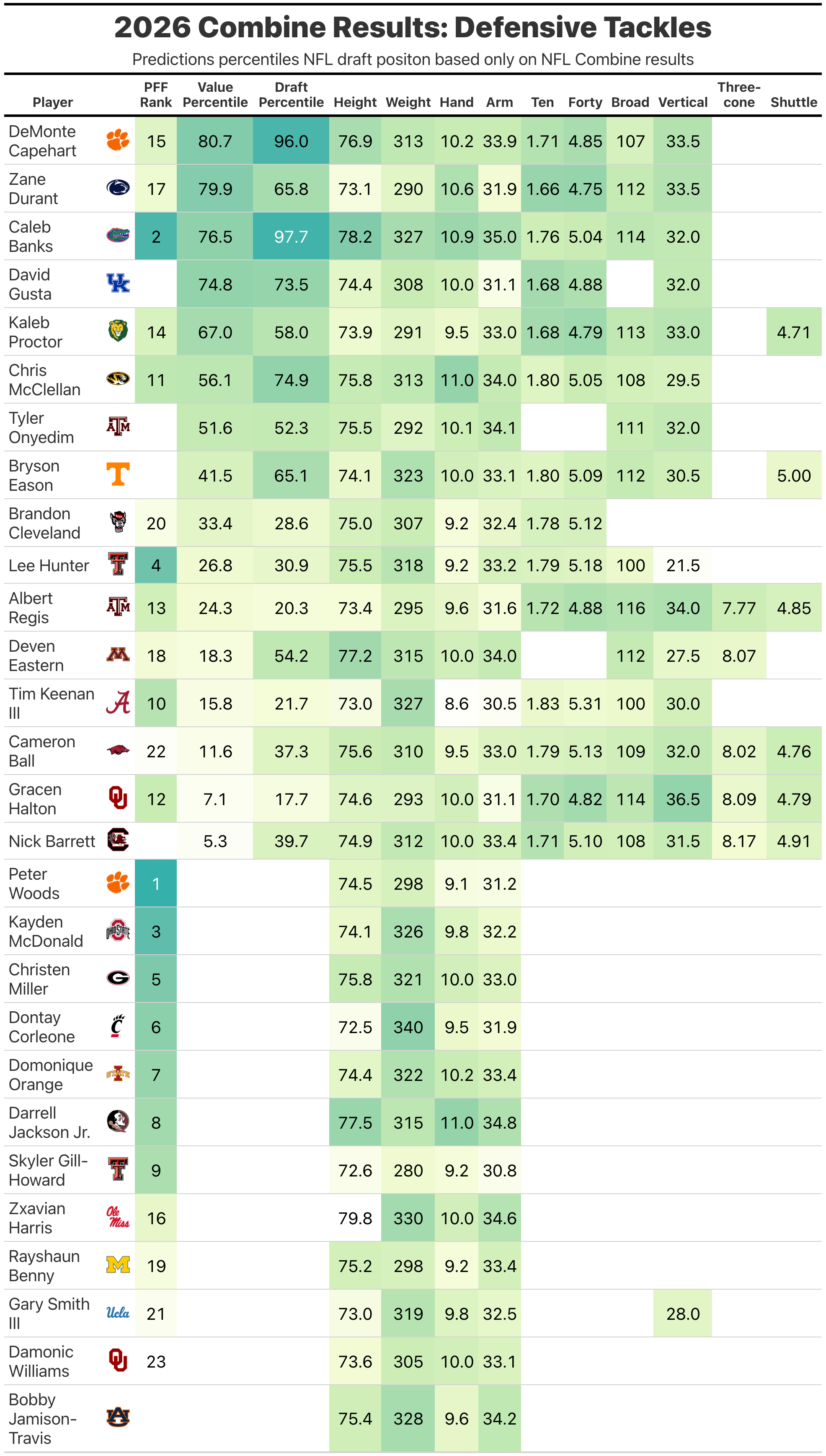
I’ll then give a table with all the combine participants at each position, and their percentile scores according to the model for draft value and actual NFL value. This will help separate how combine performances will be viewed by NFL teams and how they could project to actual NFL value, very often different things entirely. Prospects with low draft scores but high NFL value scores could be relative discounts in the draft.
I also imputed times and jump measurements for the based on weight-based assumptions if the prospect didn’t participate in the sprints, with a penalty for non-participation. Those prospects who didn’t participate in any of the sprints, jumps or agility drills will not have a score in the model.
DEFENSIVE TACKLES
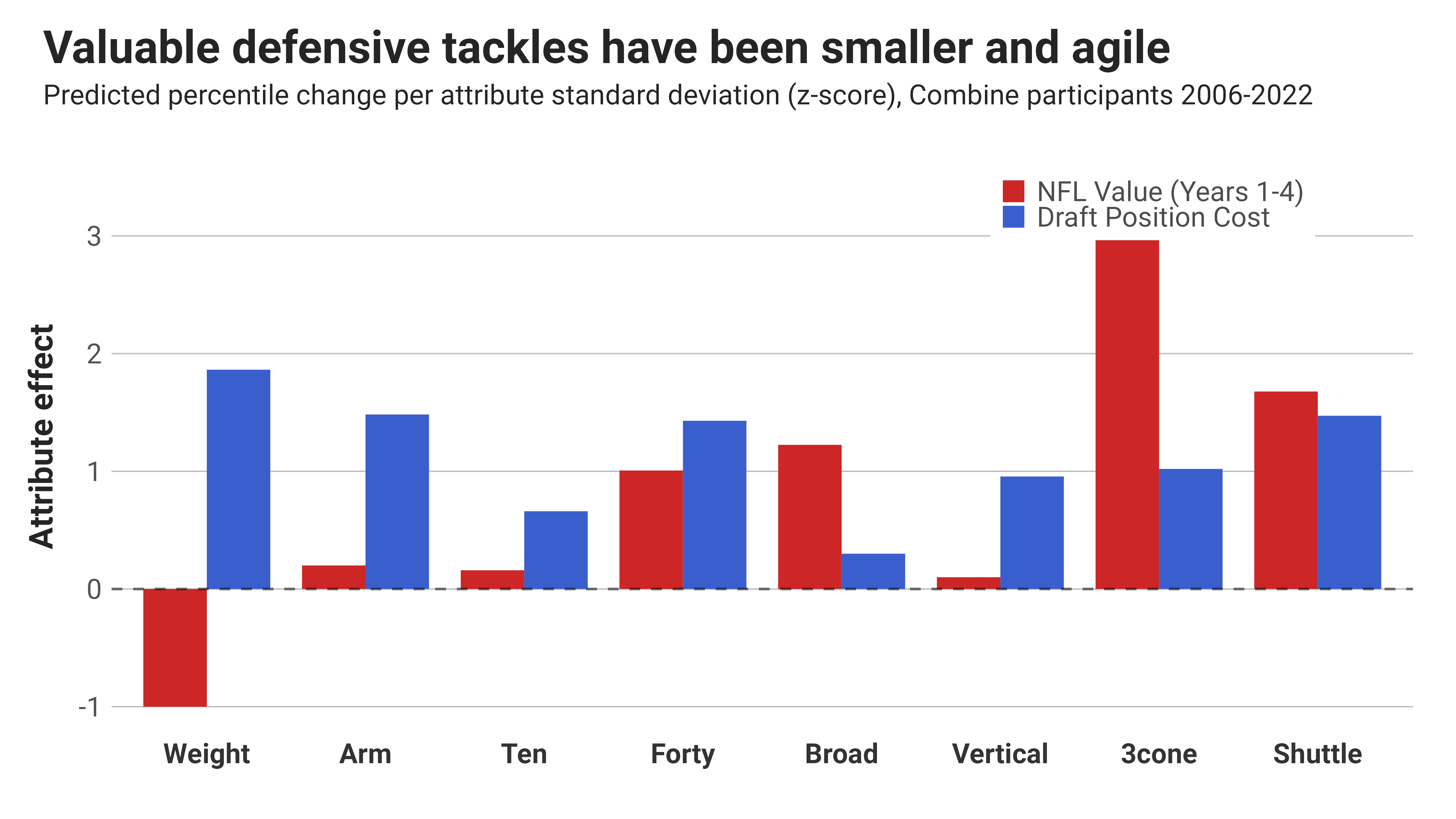
Starting with defensive tackles, we can see that they gain draft value at larger sizes, but NFL value - mostly via pass rushing - as small, agile player. Unfortunately, only six participated in the three-cone drill, but I also inputted times for those who participated in enough of the other drills to do so, with a discount to that assumed time for non-participation.
The winner of the combine by my model was DeMonte Capehart. He’s was the 16th ranked defensive interior prospect by PFF’s big board going into the combine (“PFF Rank”, note that PFF rankings are being updated with results), so his strong performance could lead to a significant rise in draft-stock. The second ranked prospect for PFF Caleb Banks posted great numbers for his draft stock (98th percentile), though my model values bigger interior defenders somewhat less than the market.
Only two of the top-9 prospects going into the combine participated in enough drills to make an assessment. While he didn’t participate in the drills and therefore doesn’t have a model score, PFF’s No. 1 prospect heading into the combine Peter Woods made negative headlines with extremely short arm length. My model doesn’t put a lot into arm length for predicting NFL success, but it matter for draft position. PFF has already dropped Woods from 13th overall on their big board pre-combine to 29th.