


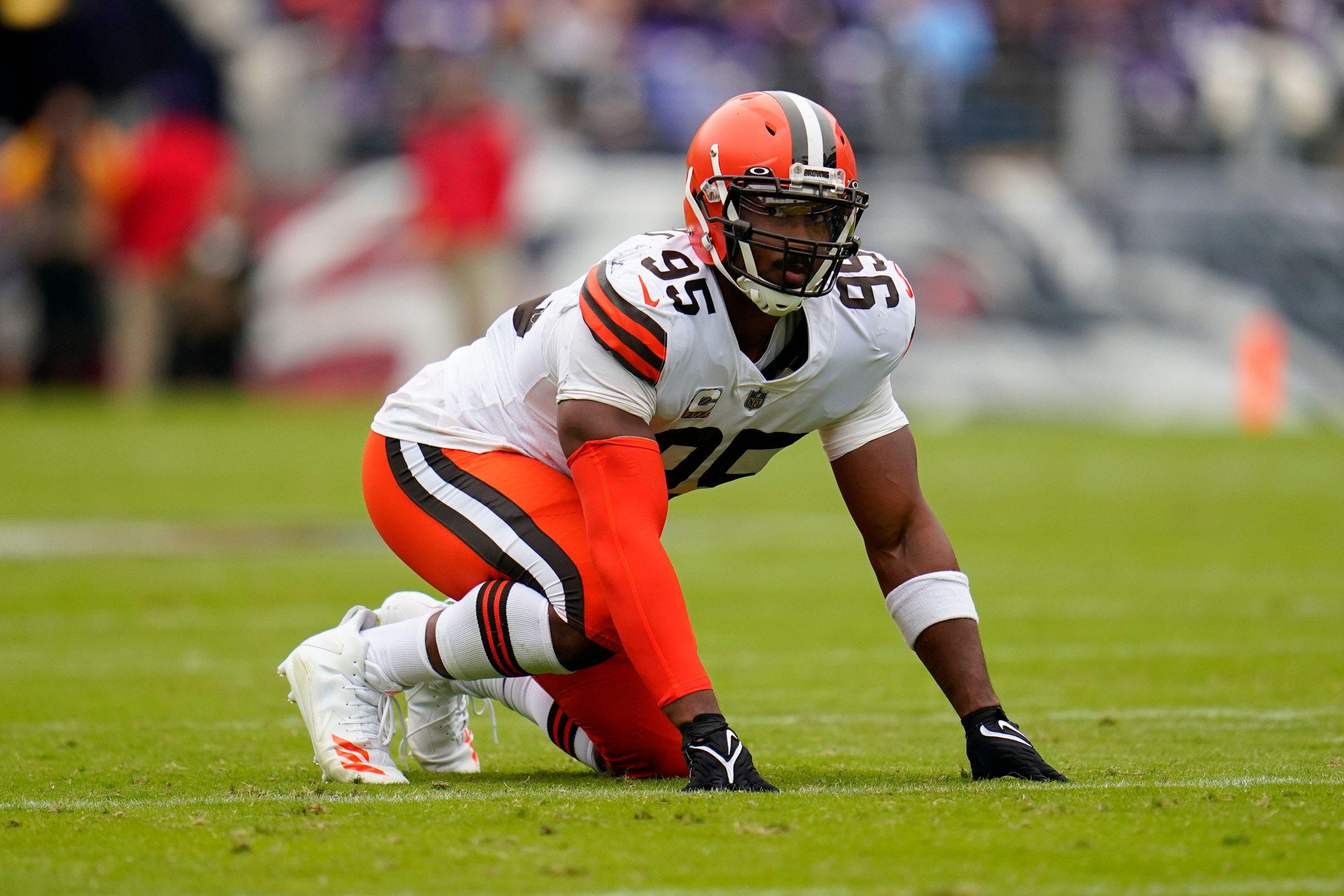
In this post, I’m going to detail the methodology and results applying my NFL Plus/Minus metric to defenders this season, which includes many of the top candidates for NFL honors, including Defensive Player of the Year and All-Pro selections, plus some names you might not expect.
My NFL Plus/Minus methodology will evolve as time goes on, and the results will also change. Even so, the first runs of results over the last two years point to a few potential gaps in our current understanding of where defender value comes from, and give us some ideas on how to apply historical on/off splits to make assumptions about the broader values of different position groups.
Earlier this week I detailed the NFL Plus/Minus methodology and results for all non-quarterback offensive players (showing that Puka Nacua may have been slightly more valuable than betting favorite Jaxon Smith-Njigba), and in this post we turn to defenders. It’s more difficult to find relevant, objective metrics to judge defenders than we have for offensive players, specifically offensive skill position players. Therefore, there’s a higher reliance on PFF grading in this analysis, especially for run defense, and coverage to a lesser degree.
METHODOLOGY
Using participation data and on- and off-the-field splits have a rich history in other sports for building player valuation metrics. No matter how much we try, the human eye and brain cannot notice the contribution to every player on every play while calculating the exact impact of those actions on the game in a comparable metric. By studying the differences in team success — in this case, using expected points added — when a player is on and off the field, we can capture the entire effect in useful numbers for comparison.
The issue with using on-off splits in football is the time for all players on the field is limited in a 17-game season, and the substitution patterns for different positions don’t allow for much comparison. Without injury, cornerbacks can play every snap of the game, whereas certain interior defenders are rotated consistently. The solution I came up with was to look at the on-off splits of groups of similar players rather than individual players.
I used the nflreadR participation data going back to 2016 — along with other traditional and advanced stats — to cluster similar players for each position in each facet of the game and then compiled the on-off splits of those groups. In doing so, we increase the total samples of measurement and reduce the noise of single-player numbers.
For the NFL Plus/Minus results, this exercise of clustering by role is applied to every position in three facets of defensive play: pass rush, run defense and coverage. The results below detail the points prevented (negative is good) numbers for the top-10 defenders in every position group and then the top-12 overall. I’ll post more commentary after the results and how I’m thinking about them.
