Over the last several years, I released the results of my updated historical modeling on the NFL Scouting Combine since 2006, which quantified the effects on NFL value (according to my Plus/Minus metric) and draft position for all measurements and drills.
In this analysis, I’m going to apply those value models to the defensive player participants at the 2026 NFL Combine. Below I’ll show an updated illustrations for the model results, i.e. the attribute effects of each drill and measurement on early-career Plus/Minus (first four seasons) and NFL draft position.
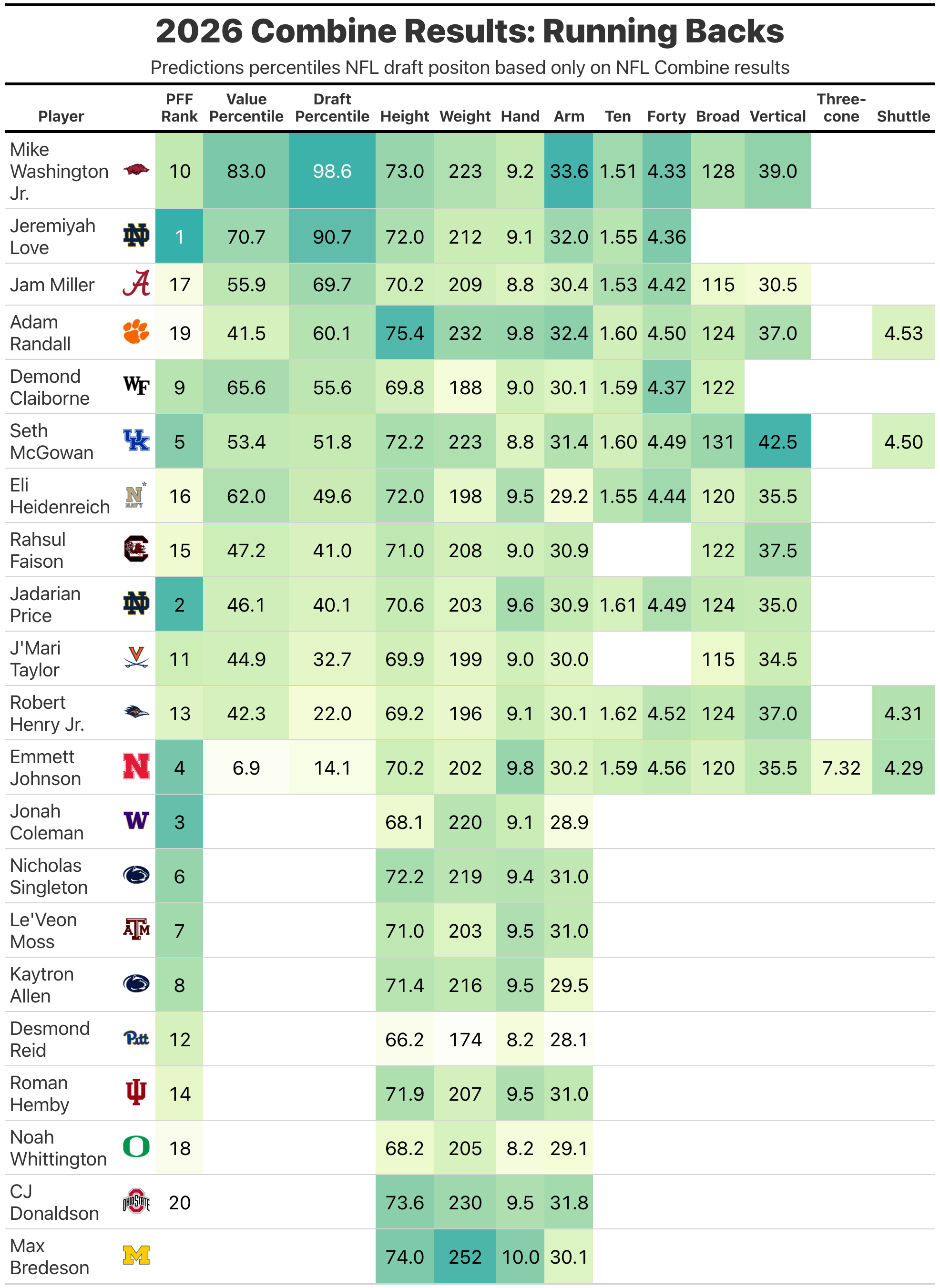
I’ll then give a table with all the combine participants at each position, and their percentile scores according to the model for draft value and actual NFL value. This will help separate how combine performances will be viewed by NFL teams and how they could project to actual NFL value, very often different things entirely. Prospects with low draft scores but high NFL value scores could be relative discounts in the draft.
I also imputed times and jump measurements for the based on weight-based assumptions if the prospect didn’t participate in the sprints, with a penalty for non-participation. Those prospects who didn’t participate in any of the sprints, jumps or agility drills will not have a score in the model. The “PFF Rank” column represents pre-combine positional prospect rankings.
RUNNING BACKS
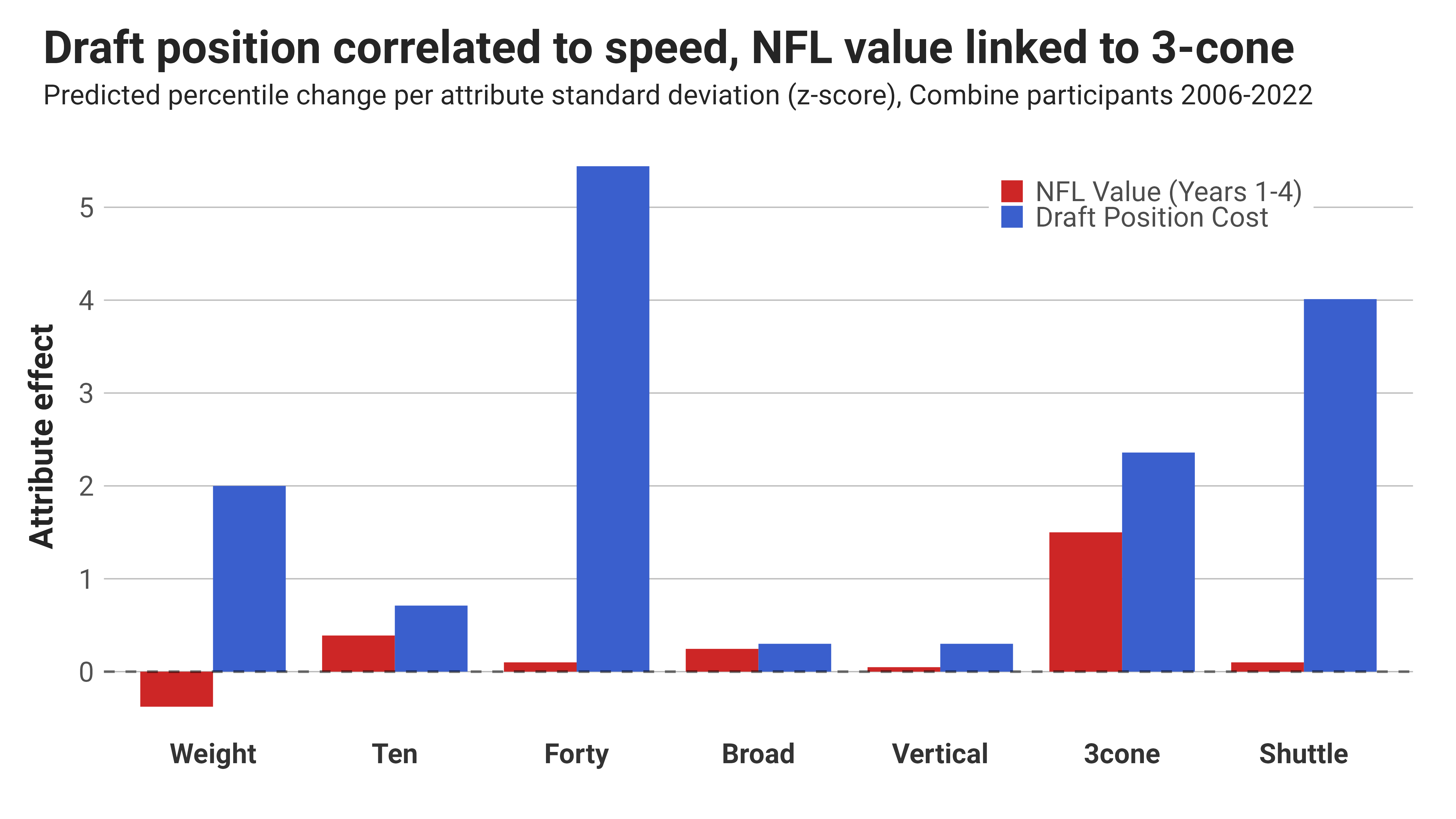
I have to be explicit here on what “NFL value” means for running backs: it’s based on my NFL Plus/Minus calculation, not an accumulation of stats that propels running backs to accolades and fantasy football MVPs. Sometimes, those values align, like in the case of Christian McCaffrey. But they don’t have to. Three cone is the one drill with meaningful effect of NFL value, having the strongest length to receiving value in the NFL. Size and speed matter a ton for moving running backs up NFL draft boards, but not as much according to my value model.
I’ve sorted the table below by draft model score (“Draft Percentile”), as all-but-one prospect skipped the three-cone drill, and those who did participate didn’t perform well enough on the drill to make up for their relatively lower results in other drills and measurements.
The winner of the combine by draft a NFL value projections was Mike Washingtion Jr., PFF’s 10th ranked player going into the combine (160th overall, a mid-5th round pick). Washington is big (223 pounds), incredibly fast (4.33 forty) and his jumps were impressive when adjusting for size. There’s reason to suspect that he would have performed relatively worse on the agility drills if he had run them, but it’s encouraging that he increased his final-season college receiving totals to 28 receptions, 12% of team receptions and tied for the third highest total on the Arkansas roster.
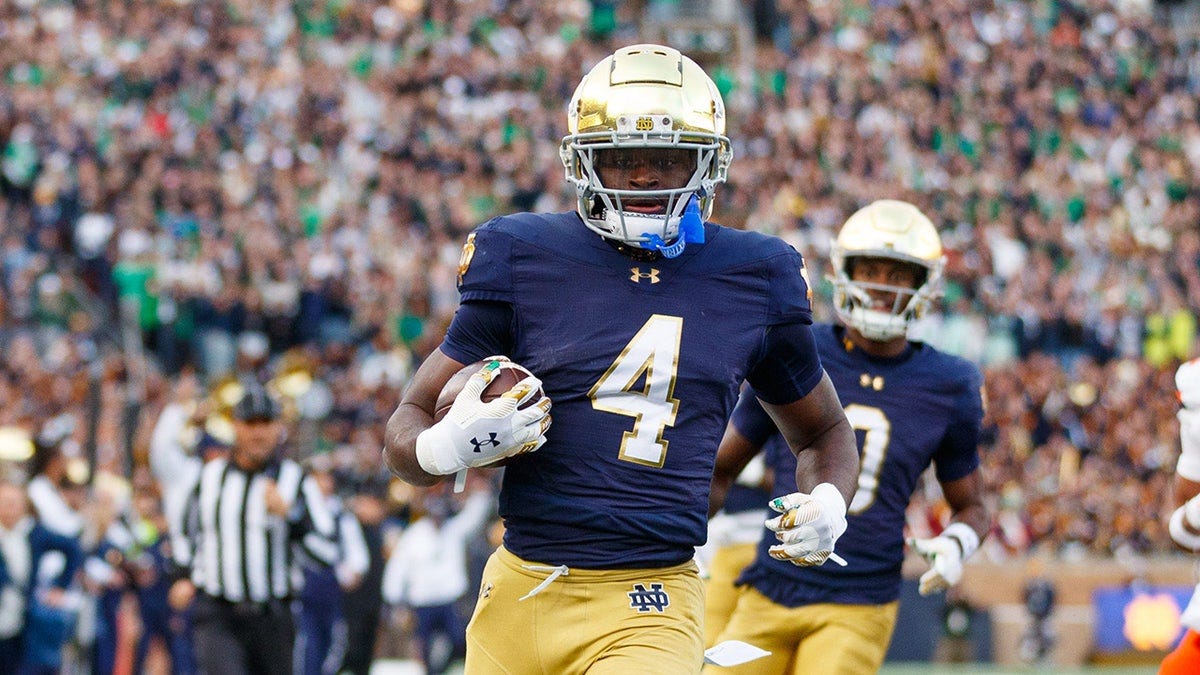
Jeremiyah Love was a big smaller and slower than Washington, but running a 4.36 forty at 212 pounds was still a top-notch result. Love didn’t participate in the jumps or agility drills. Love has shown receiving skills on the field, totaling 55 receptions for 509 yards over the last two seasons. Love is head-and-shoulders over the rest of the class on PFF’s big board, ranking fourth overall (up from sixth pre-combine), with the next-closest running back his teammate Jadarian Price at 59th.
Speaking of Price, his results weren’t great or poor, running a sub-4.5 forty at a little over 200 pounds. I’d like to see more receiving production from a back of his size (10 total receptions over the last two seasons) and to have agility times.
The relative loser of the combine was Emmett Johnson, whose 4.56 forty time at 202 pounds looked mediocre in comparison to the blazing runs we saw from other prospects. His three-cone time of 7.32 seconds scores below the 10th percentile for running backs who have run the drill over the last 15 years.