


The adjusted scores quantify team play quality, with emphasis on stable metrics (success rate) and downplaying higher variance events (turnovers, special team, penalties, fumble luck, etc). Adjusted expected points added (EPA), in conjunction with opportunity-based metrics like total plays and drives, projects adjusted points. Adjusted scores have been tested against actual scores and offer slightly better predictive ability, though their primary benefit is explanatory.
All 2026-2022 and historical Adjusted Scores and other site metrics are available in a downloadable format to paid subscribers via Google Sheet.
Find previous advanced reviews here
Unexpected Points is a reader-supported publication. To receive new posts and support my work, consider becoming a free or paid subscriber.
** Adjusted Scores table:
“Pass” - Pass rate over expectation (based on context of each play and historical averages
“Success” - Success rate on offense, a key metric in adjusted score vs actual
“H & A” - Home or away team
Bears (-6.5, 71%) vs Buccaneers

The Chicago Bears (7-2) survived five turnovers to beat the Tampa Bay Buccaneers (3-6) on a 38-yard Cairo Santos field goal with three seconds left. The adjusted scores agree it was close, with the Bears ahead by roughly two points. Both teams posted below average offensive success rates, with the Bears marginally better at 41% to the Bucs at 39%.
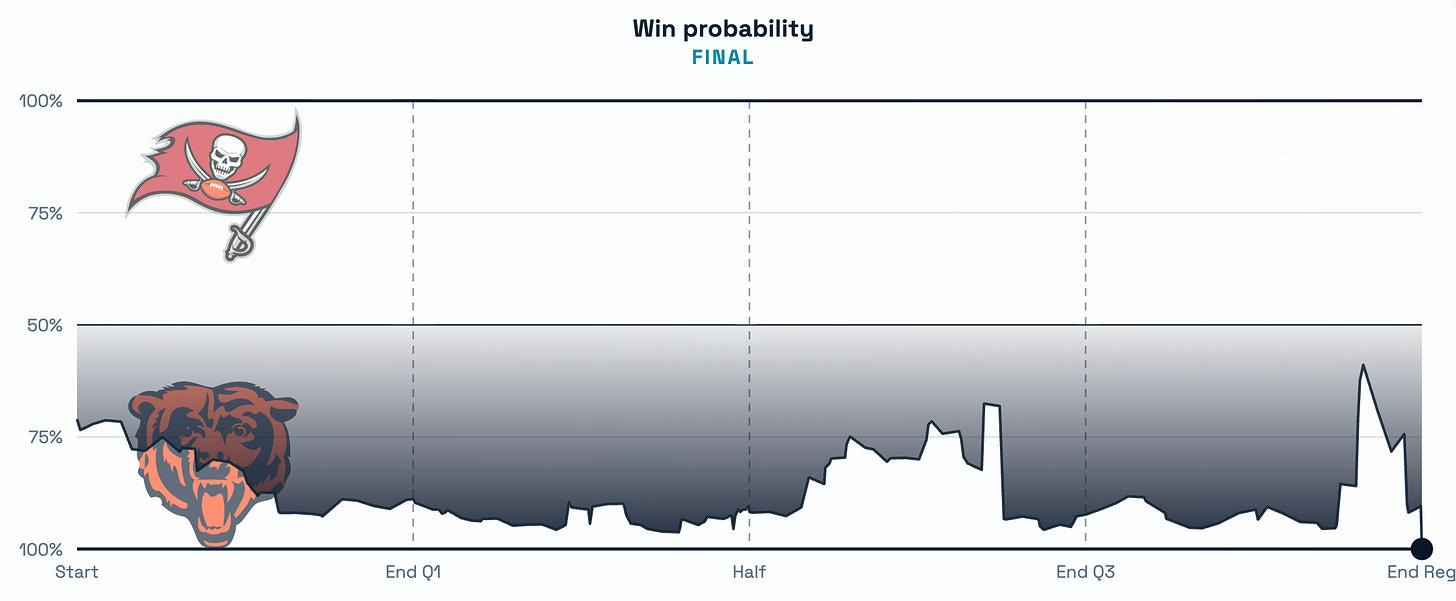
The Bears never trailed, but it got uncomfortable late. Their lowest win probability was 58.9%, reached in the final three minutes after the Buccaneers tied the game at 24.
The Bears overcame a -7.3 EPA turnover disadvantage with a +10.6 edge on third and fourth downs. Their five giveaways (four Caleb Williams interceptions and a Luther Burden fumble) tied for the most by any team in a game this season. The Bears offset a huge net penalty disadvantage (-9.7 EPA) with special teams gains (+9.9).
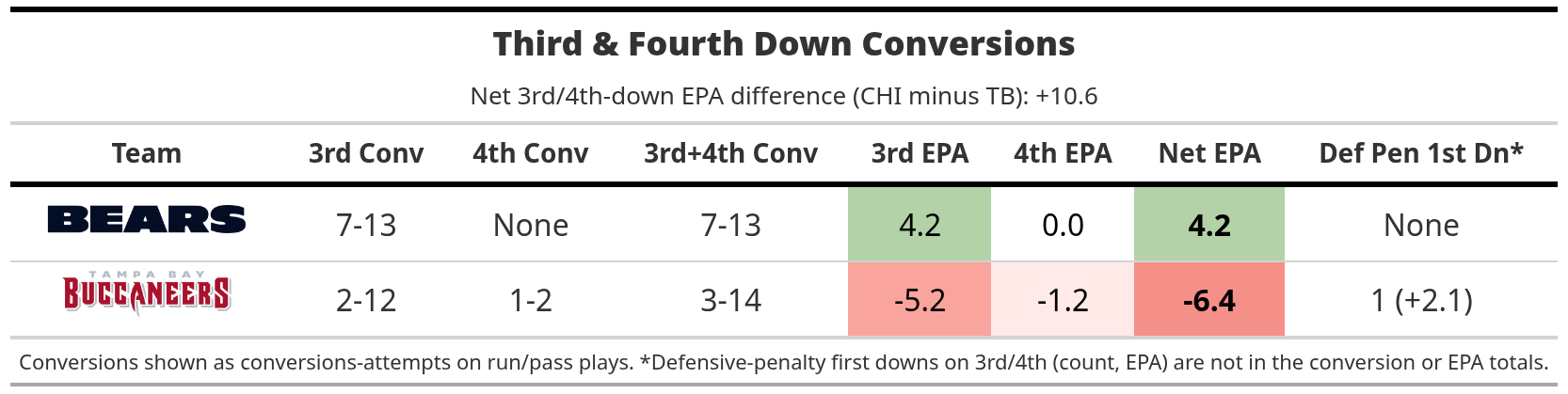
The Bears converted seven of 13 third downs (+4.2 EPA) without attempting a fourth down. The Buccaneers were only two for 12 on third down, and Baker Mayfield was stopped for no gain on fourth-and-1 from their own 35 in the second quarter (-3.2 EPA). But Williams gave the ball right back with an interception on the next snap.

The Bears averaged 7.2 yards per dropback (71st percentile) to the Buccaneers’ 6.3, but the interceptions dragged their passing EPA down to -0.21 per play, below the 20th percentile. That’s also why their 46% passing success rate looks so much better than their EPA: four interceptions concentrated a lot of damage into a handful of throws.
