


The adjusted scores quantify team play quality, with emphasis on stable metrics (success rate) and downplaying higher variance events (turnovers, special team, penalties, fumble luck, etc). Adjusted expected points added (EPA), in conjunction with opportunity-based metrics like total plays and drives, projects adjusted points. Adjusted scores have been tested against actual scores and offer slightly better predictive ability, though their primary benefit is explanatory.
All 2022-2026 and historical Adjusted Scores and other site metrics are available in a downloadable format to paid subscribers via Google Sheet.
Find previous advanced reviews here
Unexpected Points is a reader-supported publication. To receive new posts and support my work, consider becoming a free or paid subscriber.
** Adjusted Scores table:
“Pass” - Pass rate over expectation (based on context of each play and historical averages
“Success” - Success rate on offense, a key metric in adjusted score vs actual
“H & A” - Home or away team
Saints vs Steelers (-3, 59%)

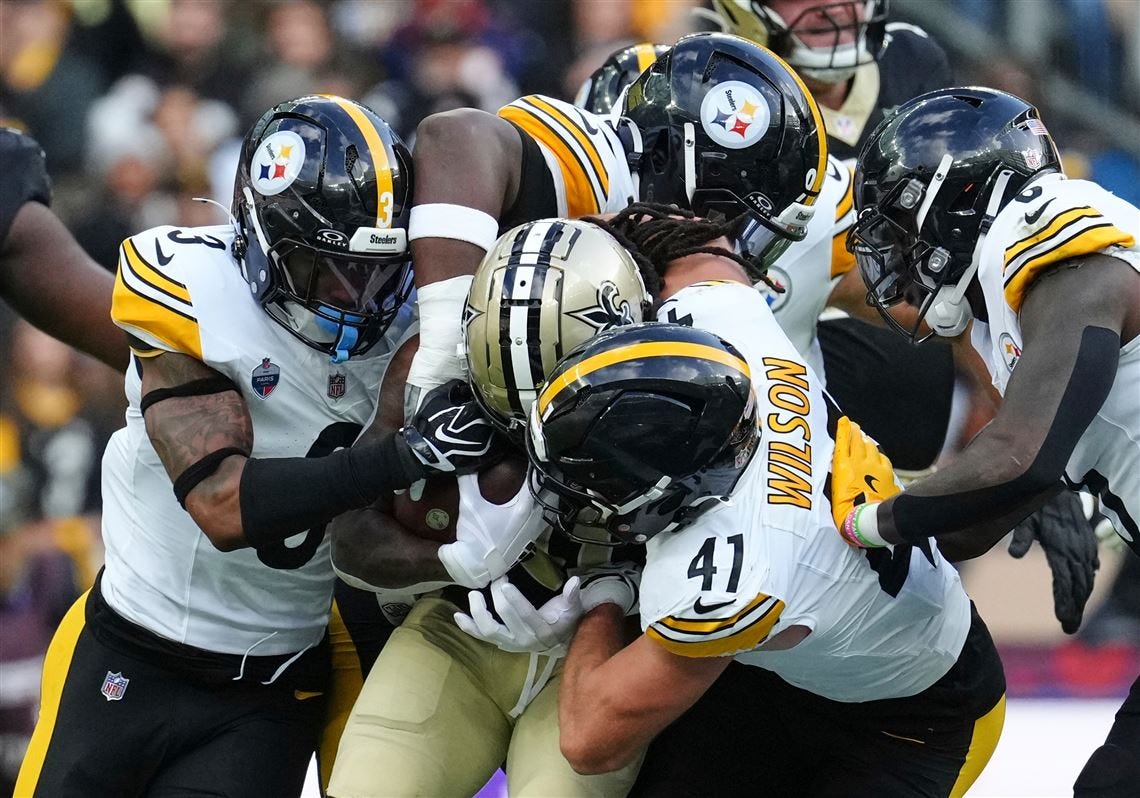
The adjusted scores agreed with this outcome, but by a bit more narrow margin than the final score (3 vs 6 point differential). The Pittsburgh Steelers’ offense was more successful on a play-by-play basis, with a positive EPA rate at 45% to the New Orleans Saints at roughly 41%. The two big factors swinging the game in the Steelers’ favor were turnover differential (+1, +6.2 EPA) and a 6.8 expected points advantage on penalties and special teams, which includes a Saints missed field goal.
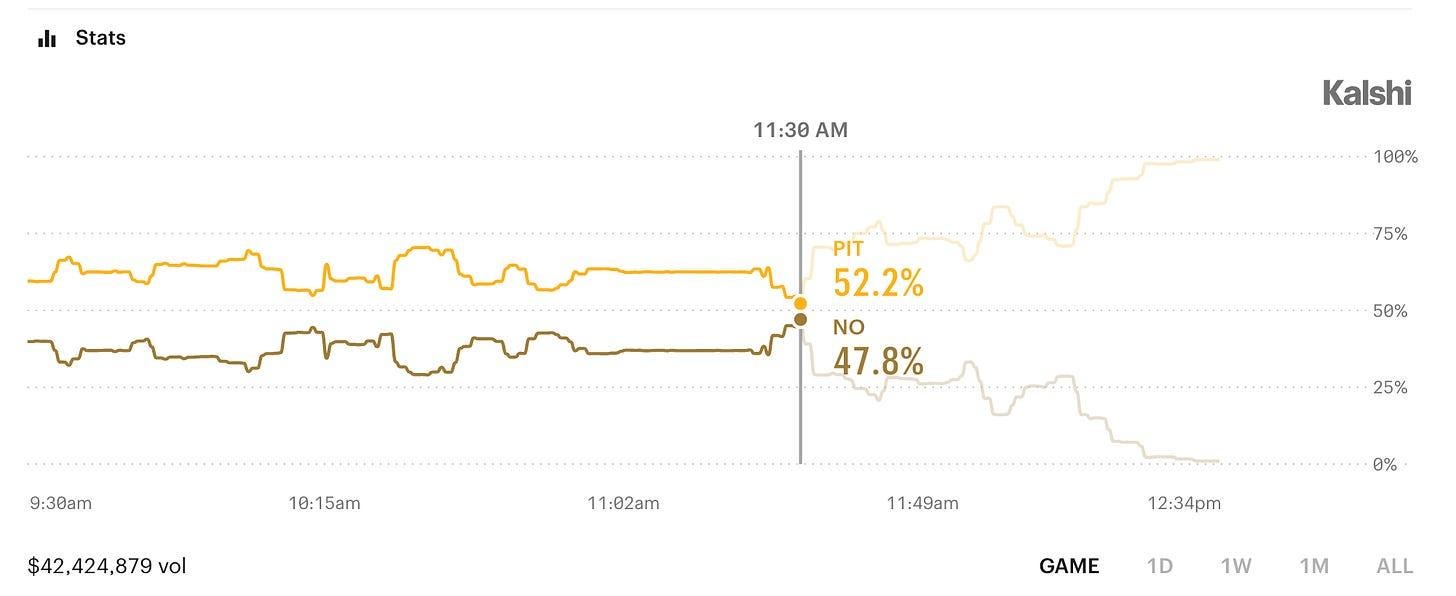
Pittsburgh never trailed, and its lowest win probability in prediction markets was 52.2%, with 8:22 left in the third quarter.
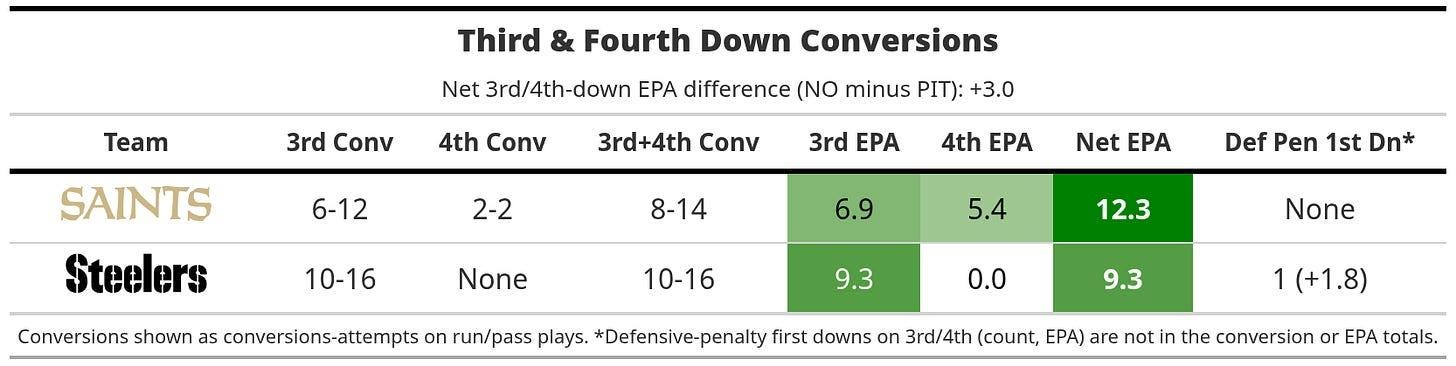
Late downs went both ways, netting a small advantage for the SAints. The Steelers converted 10 of 16 third downs, while the Saints went 6 of 12 on third down and 2 for 2 on fourth, including Shough’s 1-yard TD to Devaughn Vele (+2.5 EPA).
The Saints had 18 total rushing yards, only 12 when restricted to designed runs and excluding scrambles. This was their fewest in any single game over the last 10 seasons (163 games). The Steelers had a more balanced offense and better per-play efficiency.
