


The adjusted scores quantify team play quality, with emphasis on stable metrics (success rate) and downplaying higher variance events (turnovers, special team, penalties, fumble luck, etc). Adjusted expected points added (EPA), in conjunction with opportunity-based metrics like total plays and drives, projects adjusted points. Adjusted scores have been tested against actual scores and offer slightly better predictive ability, though their primary benefit is explanatory.
All 2025-2022 and historical Adjusted Scores and other site metrics are available in a downloadable format to paid subscribers via Google Sheet.
Find previous advanced reviews here
** Adjusted Scores table:
“Pass” - Pass rate over expectation (based on context of each play and historical averages
“Success” - Success rate on offense, a key metric in adjusted score vs actual
“H & A” - Home or away team
PHI (-7) vs CHI

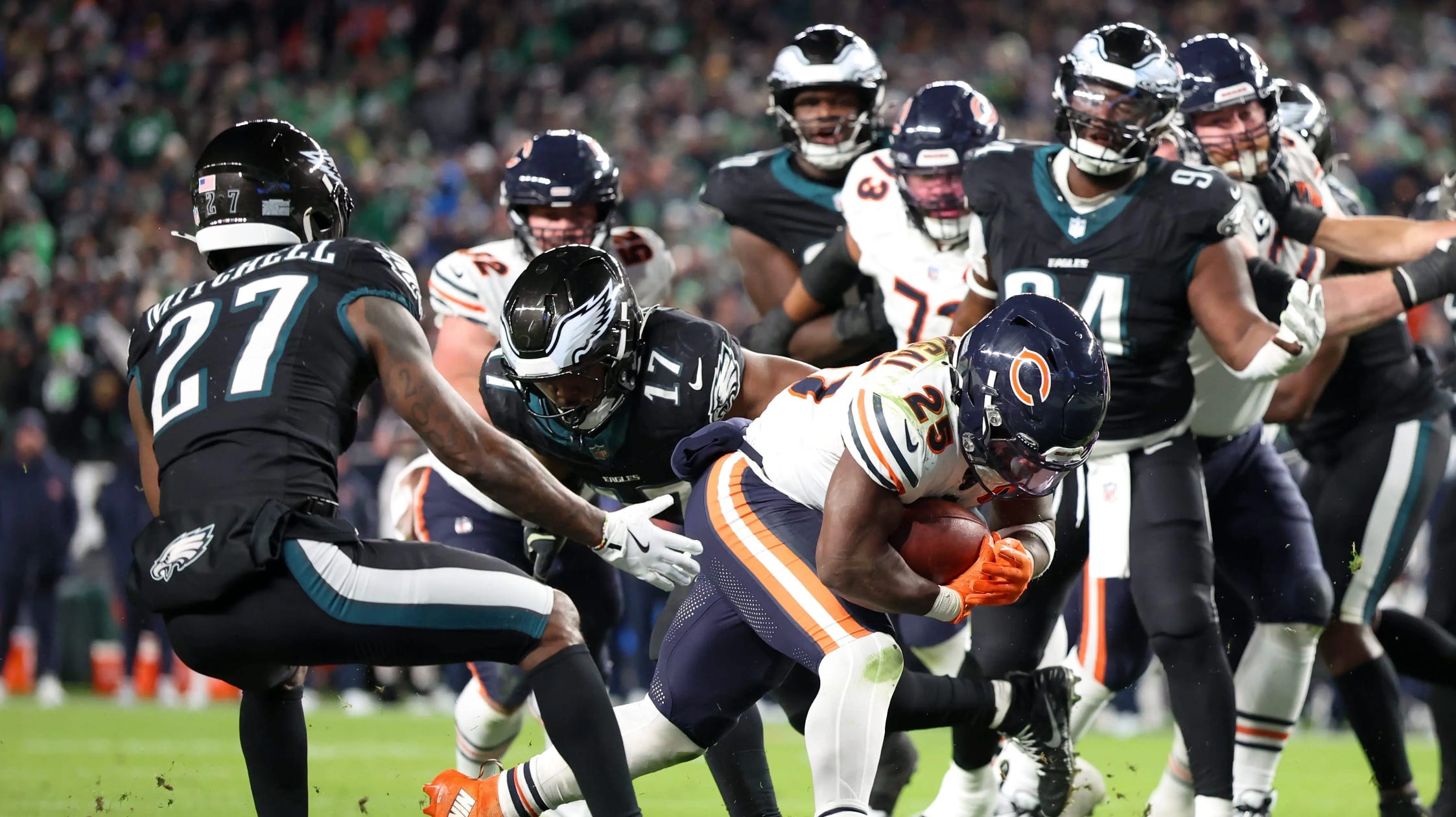
The Chicago Bears combined strong defense and a high-powered running game to defeat the Super Bowl champion Philadelphia Eagles on the road. The win places the Bears alone at the top of the NFC North at 9-3, facing the 8-3-1 Green Bay Packers in two of the next three weeks.
I’m not sure this result reveals as much about the strength of the Bears as the weakness of the Eagles, one of many “elite” teams whose internal performance metrics haven’t been impressive all season. The loss takes the Eagles out of a realistic position to get the No. 1 seed in the NFC, with the Los Angeles Rams in the driver’s seat (65% implied probability), despite losing to the Eagles earlier this season.

The Bears had a slightly higher offensive success rate (45% to 40%), with rushing strength (50%) offset by a weaker dropback game (38%). They averaged +0.20 EPA per designed run (92nd percentile), and leaned into the run while playing with a lead, registering 44 designed runs to 42 dropbacks. The box score tells the story, with Kyle Monangai and D’Andre Swift totaling 255 yards and two scores on 40 carries (6.3 YPC).
The Eagles offense suffered on the ground, only calling 17 designed runs while playing from behind, and a tush-push fumble costing them 5.0 expected points. While scramble gains technically come on dropbacks and fall into my “pass” classification, it’s notable that Jalen Hurts didn’t have any during the game, a normally consistent source of EPA value for the Eagles. Playing with a deficit forced the Eagles into a pass-heavy offense, dropping back 35 times to only 17 designed runs.
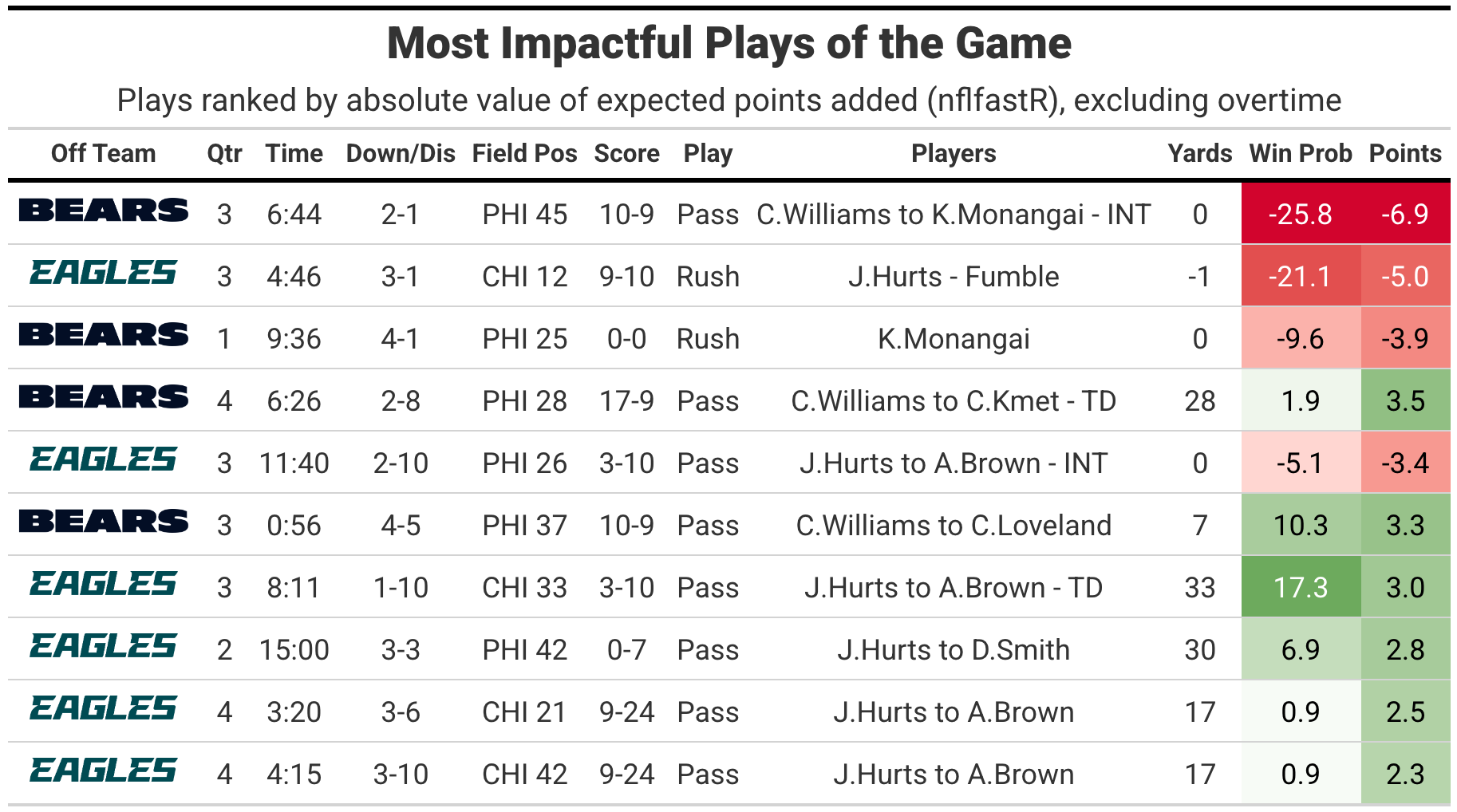
The downside for the Bears in the win is that they shouldn’t expect to beat many teams in the playoffs with their quarterback playing at the level we saw. Caleb Williams average a 3.8 net yards per pass attempt, completed fewer than half of his passes (17 of 36, -12.5% completion percentage over expectation), and throwing an ill-advised pick on a screen pass when there was no need to take a risk at 2nd & 1 (-6.9 EPA).
Jalen Hurts wasn’t horrible outside of his stripped tush-push fumble (-5.0 EPA), but the game showed how reliant the Eagles have been on his rushing value to win close games. The Eagles offense was unable to make early down gains and consistently found themselves in third-and-long situations, converting 4-for-11 for -2.5 EPA.
