


THE CLAIM
Through 10 games, Aaron Rodgers has completed 220 of 361 passes (60.9%, 23rd of 31 qualified passers) for 2,241 yards (17th), 16 touchdowns (13th) and 6 interceptions, averaging 6.2 yards per attempt (25th) with an 86.6 passer rating (19th) and a league-worst 257 yards lost on 31 sacks (4th-most).
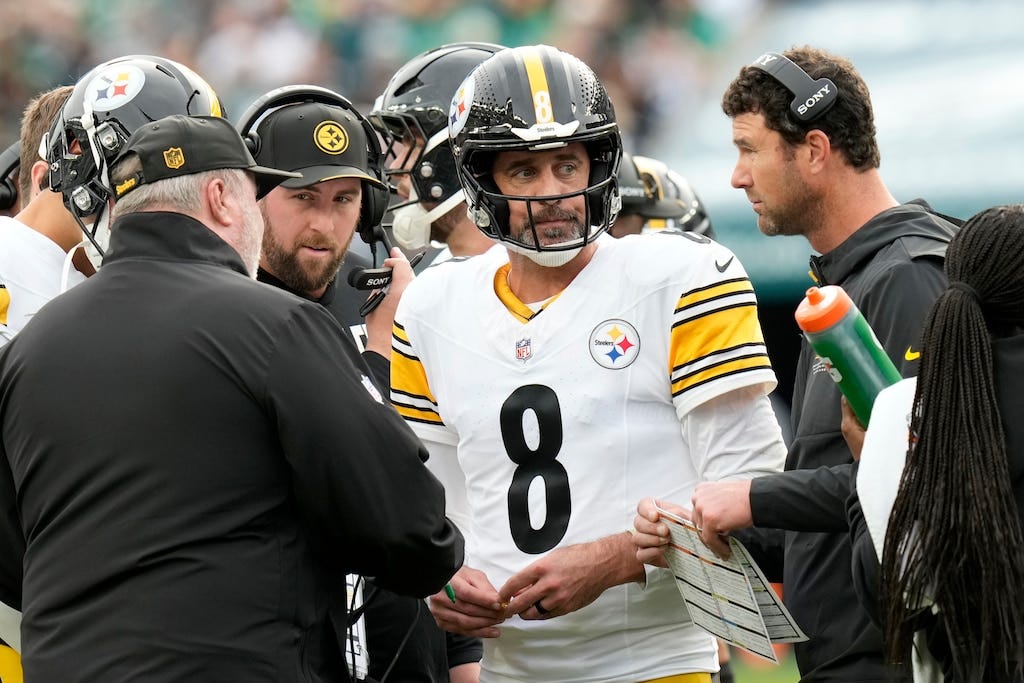
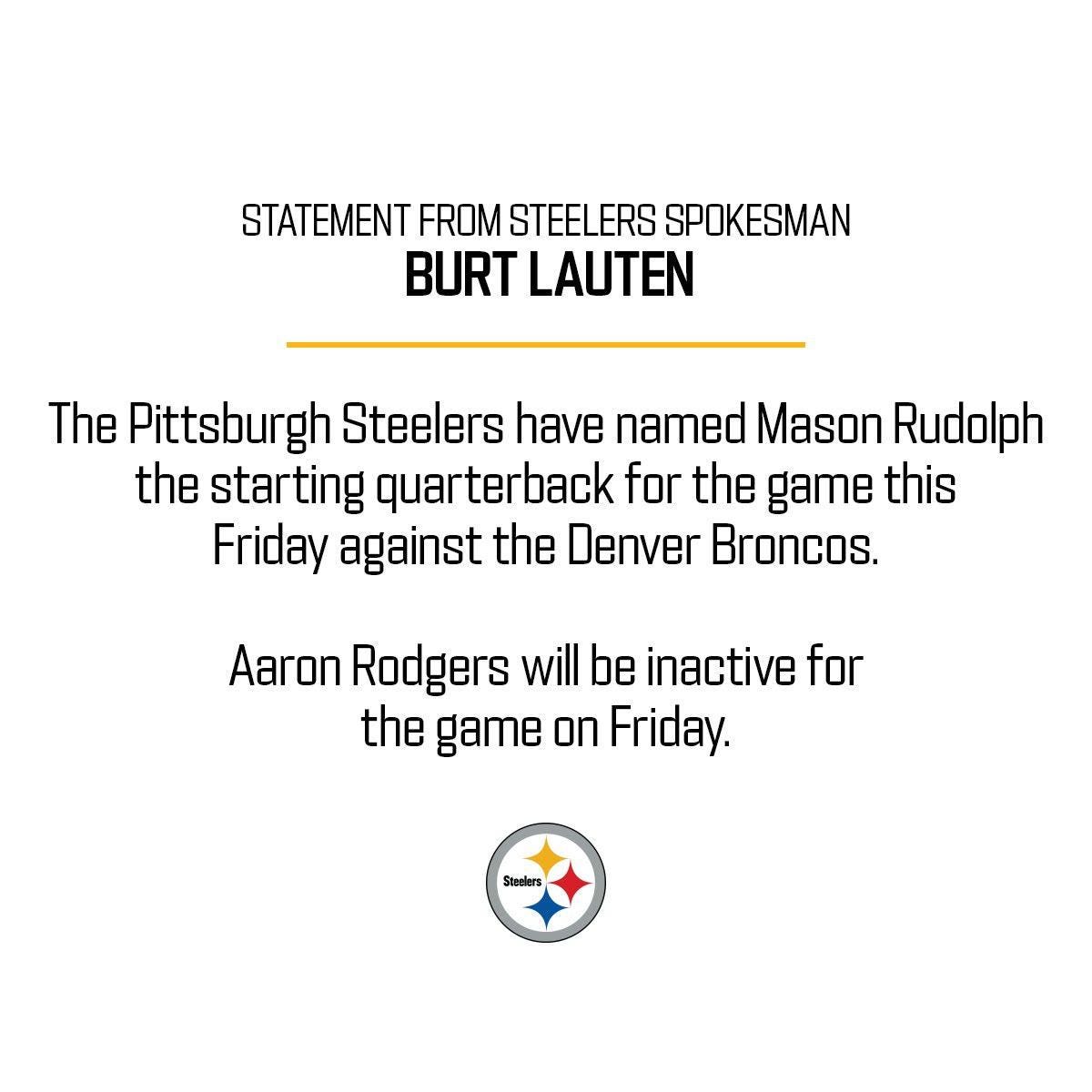
Late Tuesday night, the Pittsburgh Steelers announced that they have benched Rodgers—making him inactive for Friday’s game against the Denver Broncos—and named Mason Rudolph the starter. One day earlier, head coach Mike McCarthy had told reporters, “Aaron Rodgers is our quarterback,” before ESPN and the Pittsburgh Post-Gazette reported that Tuesday’s switch was a coach’s decision to spark a slumping offense ahead of Rodgers’ 43rd birthday next week.
Does the data actually back the Steelers’ rationale for benching Rodgers: that Rudolph gives them a better chance to win?
THE VERDICT: LEAN DEBUNK
Rodgers has played poorly this season, averaging 6.2 yards an attempt with a 7.9% sack rate (up from 5.4% last season), and his -0.058 expected points added (EPA) per dropback ranks 28th of 32 quarterbacks with at least 150 dropbacks, well below the +0.042 league average. Even so, benching him for Rudolph is not an upgrade in most simulations using my Bayesian projections, though Rudolph does have more theoretical upside.
If you believe Rodgers’ age and steep 2026 drop outweigh his career track record, who will be the better quarterback down the stretch becomes closer to a coin flip. Adding a late-season aging penalty nudges Rudolph’s odds of outperforming Rodgers close to 50%, making the risk of this quarterback switch defensible as a short-term jolt even though the evidence still leans slightly toward Rodgers.
THE EVIDENCE
This analysis compares each quarterback’s Bayesian projected EPA per play—combining career performance, recent seasons, draft pedigree and luck adjustments—and estimates the full range of outcomes around those projections.
Looking across the NFL, Rodgers still projects slightly above the +0.070 league average at +0.087 EPA per play, while Rudolph trails at +0.042, though Rudolph’s thin track record makes his range of outcomes roughly twice as wide.
